
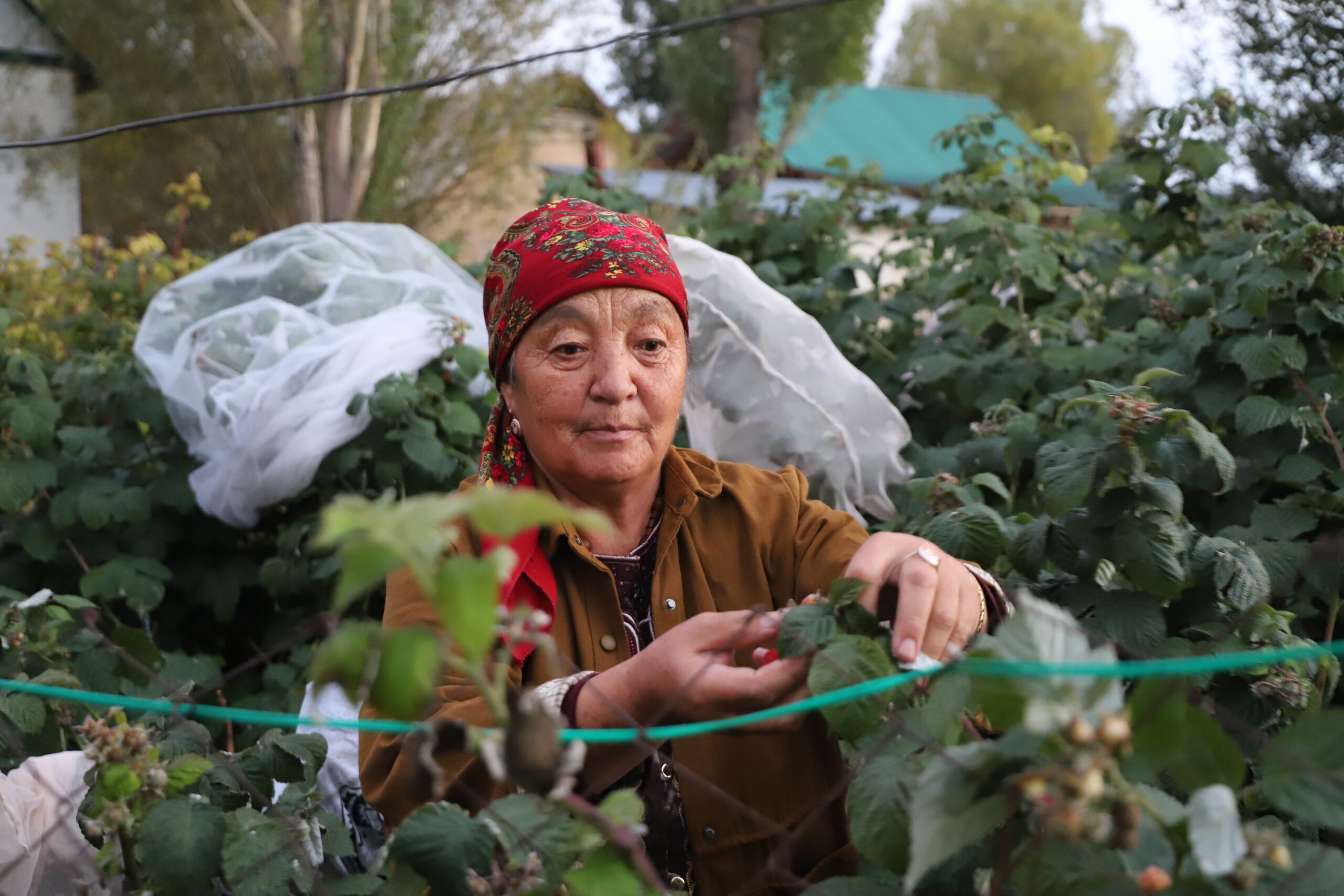
Across the Issyk-Kul and Naryn regions, El-Too is helping local communities develop new opportunities through practical knowledge, sustainable tourism, permaculture and environmental conservation.
What does sustainable development look like in everyday life? Sometimes it begins with a farmer learning how to select healthy seedlings. Sometimes it is a guesthouse owner creating an online listing to reach new visitors. And sometimes it takes shape in a small garden, where students and community members discover how to grow vegetables while making better use of the soil and water available to them.
These are some of the ways El-Too, a civil society organisation in Kyrgyzstan and a long-standing partner of Central Asia Solidarity Groups, is bringing environmental awareness and community development together.
Throughout 2026, El-Too has continued working with farmers, tourism businesses, students, local authorities and community members in the Issyk-Kul and Naryn regions. Its activities build on years of experience in permaculture, sustainable livelihoods and environmental conservation, with particular attention to practical solutions shaped by local needs.
For many rural households, agriculture remains an important source of income. Yet changing environmental conditions and limited access to reliable planting materials can make farming increasingly challenging. To address some of these difficulties, El-Too has been providing farmers across 12 communities with information about seed selection, local varieties, certified planting materials and licensed nurseries.
The initiative has also demonstrated the importance of listening to participants and adapting activities accordingly. When farmers expressed a need for more information about seedlings, El-Too developed short instructional videos on choosing healthy plants and planting them correctly. Shared with participating farmers and published on social media, the videos reached a wide audience beyond the communities directly involved in the project, helping make practical agricultural knowledge more accessible.
Tourism offers another opportunity for communities to diversify their incomes, particularly in areas that receive fewer visitors than Kyrgyzstan’s established tourist destinations. In 2026, El-Too organised two training sessions in the Issyk-Kul and Naryn regions, each lasting two days. Together, they brought together 59 participants, including 40 newcomers and 19 people who had previously taken part in similar activities.
Participants learned how digital platforms such as Booking.com, Google Maps and 2GIS can help guesthouse owners improve their visibility and connect with potential visitors. They also explored hospitality standards, sustainable tourism practices and accessible ways to promote their services. The interest continued beyond the training sessions, with additional guesthouse owners seeking individual consultations and assistance with digital platforms.
The results are already visible in the experiences of some participants. According to El-Too, one guesthouse owner from Bokonbaevo, a village in the Issyk-Kul region of Kyrgyzstan, began welcoming visitors just two weeks after completing the training. Another participant, who had attended earlier activities, reported hosting approximately 85 tourists during the reporting period. Three guesthouses supported through previous training activities also received Booking.com Traveller Review Awards, reflecting positive feedback from their guests.
Other examples demonstrate the value of continued support. A guesthouse owner in the Naryn region established cooperation with Kyrgyzfilm, creating an additional opportunity to accommodate visitors travelling for film-related work. These experiences show that training can provide a useful starting point, while follow-up consultations and peer learning help participants put their knowledge into practice.
Alongside its work in rural communities, El-Too has been introducing permaculture principles to students and young people in a town in northern Kyrgyzstan. Working with a local university, the organisation initially explored establishing a demonstration garden at the university’s botanical garden. However, practical limitations led the team to select a more accessible location at a rehabilitation centre.
There, students, young people, civil society representatives and centre staff helped establish a small permaculture garden. Participants prepared raised beds, planted vegetables and herbs, introduced vertical growing supports and used mulching to conserve soil moisture. Existing trees and shrubs were incorporated into the design, demonstrating how different plants can grow together in a limited space.
The garden became a practical learning environment where participants could move from discussing environmental principles to applying them directly. The initiative also attracted support from Mudita Adventures, a tourism organisation that contributed financially to the garden and participated in improving the rehabilitation centre’s grounds.
While agriculture and tourism can create important livelihood opportunities, they can also place pressure on the natural environment. Around Lake Issyk-Kul, increasing tourism, construction and off-road vehicle use pose challenges for fragile semi-desert ecosystems. El-Too has therefore been working to raise awareness of these landscapes and encourage approaches that recognise their ecological value.
One initiative involved establishing a demonstration rock garden using plant species native to Issyk-Kul’s semi-desert areas. The garden provides an example of how local vegetation can be incorporated into landscaping instead of relying entirely on imported ornamental plants. El-Too also brought together representatives of local authorities, civil society, communities and the tourism sector to discuss conservation challenges and opportunities for cooperation.
In September 2026, El-Too launched its “One Road, One Trail” awareness campaign, highlighting how vehicles travelling outside designated routes can damage vulnerable vegetation and ecosystems. Through videos and other communication materials, the campaign has reached a wide audience and encouraged greater awareness of the need to protect these fragile landscapes. El-Too has also submitted an application seeking recognition of a semi-desert area as an other effective area-based conservation measure (OECM), an approach to recognising biodiversity conservation outside formally designated protected areas. A decision on the application was still pending at the time of the organisation’s October update.
To document the experiences accumulated through its community work, El-Too has also prepared a publication entitled The People Behind the Change. The collection brings together stories about permaculture, sustainable livelihoods, youth engagement and environmental initiatives, highlighting the people whose knowledge, commitment and cooperation make these activities possible.
Across these different initiatives, a common approach emerges: sustainable change becomes more meaningful when communities help shape it themselves. Whether farmers are sharing agricultural knowledge, guesthouse owners are building new income opportunities, or young people are learning to care for their environment, El-Too’s work illustrates how practical skills and local cooperation can support both livelihoods and nature.
Through our continued partnership with El-Too, Central Asia Solidarity Groups supports these community-led efforts as part of its Sida-funded civil society programme, bringing together local knowledge, environmental protection and opportunities for more resilient communities.