
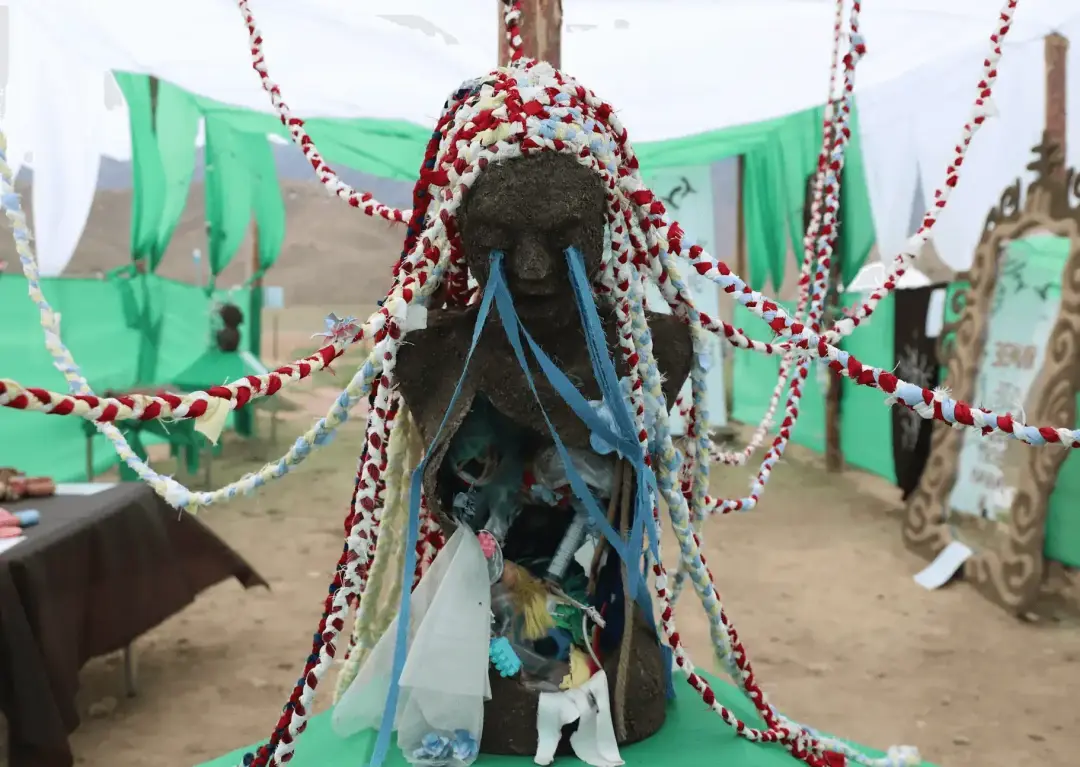
Featured image: Installation ‘Wounded but still alive’ by Ademi Raimbekova
In 2025, Centralasiengrupperna, together with our long-term partner from Kyrgyzstan, El Too, created a project and expert group called ‘Reviving the Roots’ to address the issue of unsustainable soil management and land degradation in Kyrgyzstan. The project connected a range of different actors, including researchers, civil society, smallholder farmers, soil experts, agronomists, and artists. Together, we worked to promote sustainable soil management practices in Kyrgyzstan, with a long-term goal of supporting food security and rural livelihoods. This blog post offers an overview of the project, highlighting key results and activities.
Soil health in Kyrgyzstan
Kyrgyzstan is currently facing severe and progressive land degradation due to widespread unsustainable farming methods and land use practices. Poor soil health causes food and water insecurity, threatening the livelihoods in Kyrgyzstan.
In the pre-Soviet era, people in Kyrgyzstan generally practiced sustainable, ecocentric land use, primarily based on nomadic pastoralism with seasonal migration and communal land management, alongside limited settled farming in fertile areas. Their perception of soil used to be more holistic, reflecting the Kyrgyz ethos of harmonious coexistence with nature. Soviet rule replaced this with a more exploitative, modernisation-driven approach that prioritised yield maximisation and treated nature as a resource for development. This legacy, coupled with years of unregulated land use after Kyrgyzstan gained independence, has shifted the paradigm towards extractive profit-driven approaches. Additionally, lack of support for smallholder farmers, who make up the majority of farming entities in Kyrgyzstan, compels many to prioritise short-term productivity over long-term soil care. State policies further worsen soil degradation by subsidising mineral fertilisers, making them more affordable than sustainable alternatives.
The ‘Reviving the Roots’ project was created with the goal of restoring reverence for soil as a living ecosystem. Our approach drew on local ecological knowledge and used traditional art forms popular among smallholder farmers in Kyrgyzstan to communicate this knowledge.
A study on soil perceptions and soil care practices in Kyrgyzstan
The first component of the project was a study of historical and current local perceptions of soil and soil care practices in Kyrgyzstan’s Issyk-Kul and Naryn regions. Together with nine students from four Kyrgyz universities that came from different academic disciplines – including anthropology, sociology, linguistics, international relations, and history – El-Too conducted 23 interviews and 6 focus group discussions. The participants of the study included smallholders, village elders, soil scientists, agronomists, legal experts, civil society representatives, and traditional epic poets. The diversity of the participants allowed for a nuanced view from different perspectives. The group also analysed several folkloric sources, including proverbs, the Manas epic, short epic poems, and the work of poet improvisers to gain insight into historic and cultural perceptions of soil.
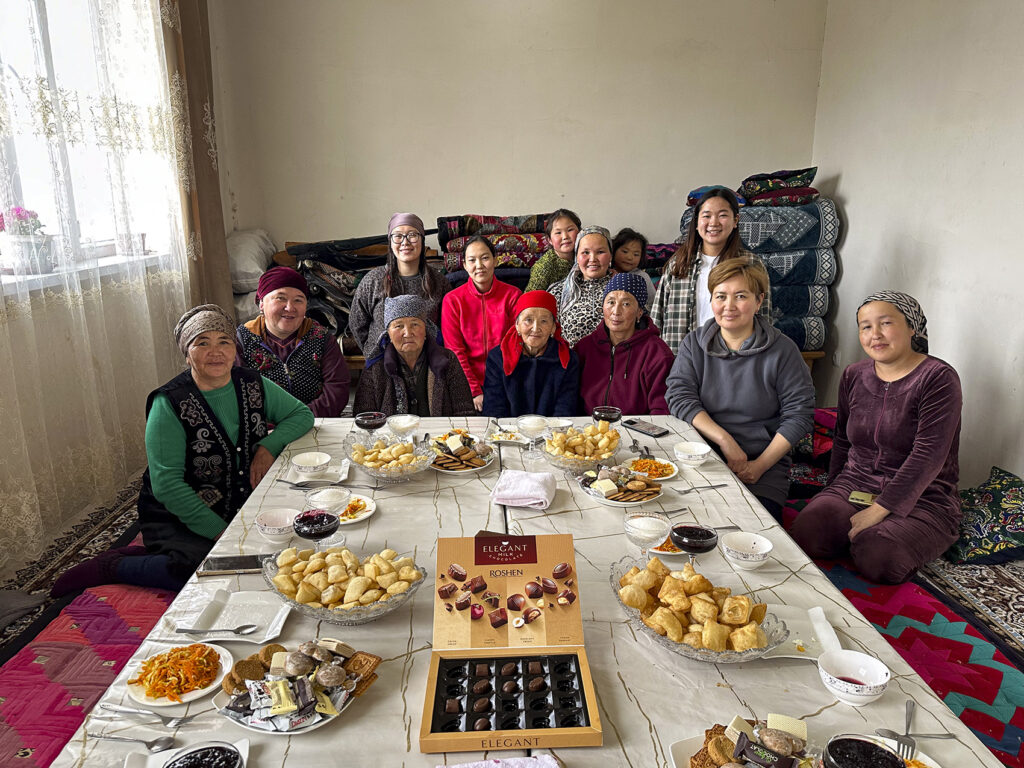
Focus group discussions in the Naryn region, Kyrgyzstan
The data were then analysed by the expert group and published in a report, which served as the foundation for the implementation of the rest of the project and contained recommendations for local self-governance and state authorities; civil society and international organisations; agronomists, soil scientists, and soil laboratories.
The text of the report is available online.
Mother Earth exhibition
To communicate the research results to wider audiences and to raise awareness about soil degradation, we have collaborated with Kyrgyz artist-designers – Aliya Edilova and Zarina Nazar –, as well as local art and design students to create an art exhibition. A three-day art camp was organised to translate research insights into interactive installations combining soil, recycled materials, scientific knowledge, and traditional symbolism.
The exhibition centers on the relationship between humans and soil and invites visitors to think about their relationship with the land and nature in both practical and spiritual senses. It combines art, science, and practical approaches and provides visitors with knowledge about how to care for the soil. Many of the artworks incorporate both waste materials and soil itself.
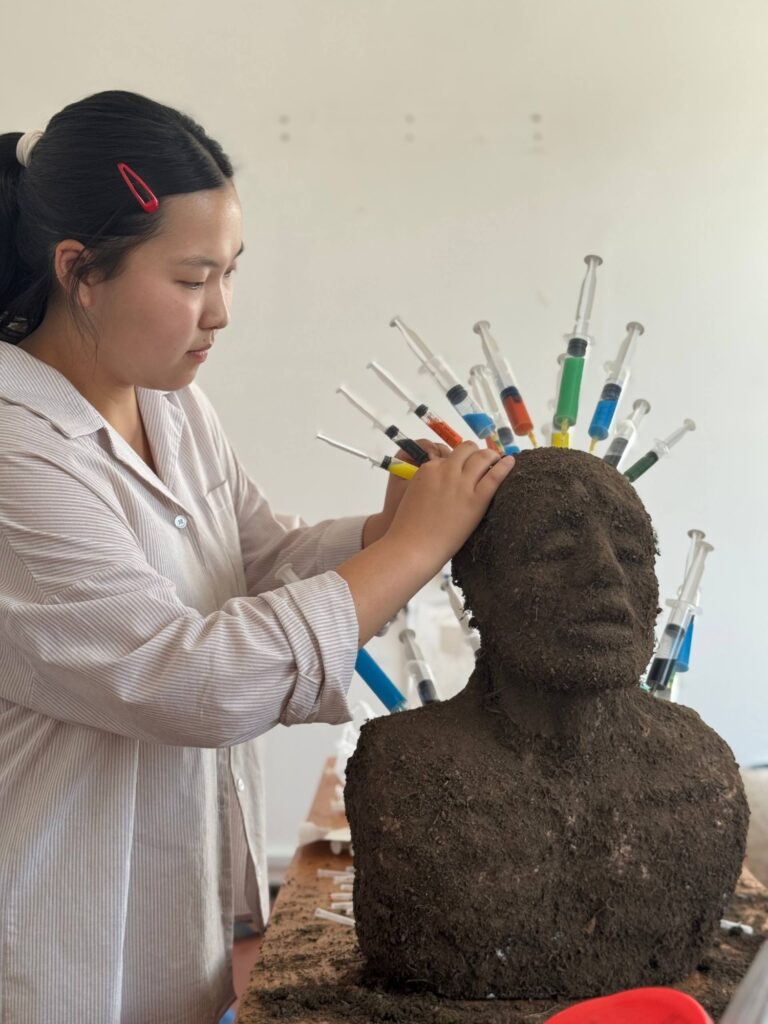
Saira Yusupova and the installation ‘Poisoning’
The exhibition opened in the summer of 2025 at an ethno-festival Ton Fest on the southern shore of Issyk-Kul. Over three days, it attracted around 500 visitors, including farmers, residents, the Ton District administration, bloggers, activists, embassy representatives, and entrepreneurs. It then travelled to several other locations, including Naryn Art Gallery and the youth forum ‘Kyrgyzstan of My Dreams’ in Karakol. The exhibition will be made permanent at Bokonbaevo tourist centre. You can learn more about the exhibition here. The online version of the exhibition is available in three languages: Kyrgyz, English, and Russian.
Discover the online exhibition!
Visitor feedback revealed not only strong local interest in arts- and culture-based approaches to rural and environmental initiatives, but also a shift in perceptions of soil. Many participants expressed surprise at the richness and complexity of soil life and reflected that caring for soil life means caring for oneself. Soil was increasingly seen as a living system that requires respectful, informed interaction.
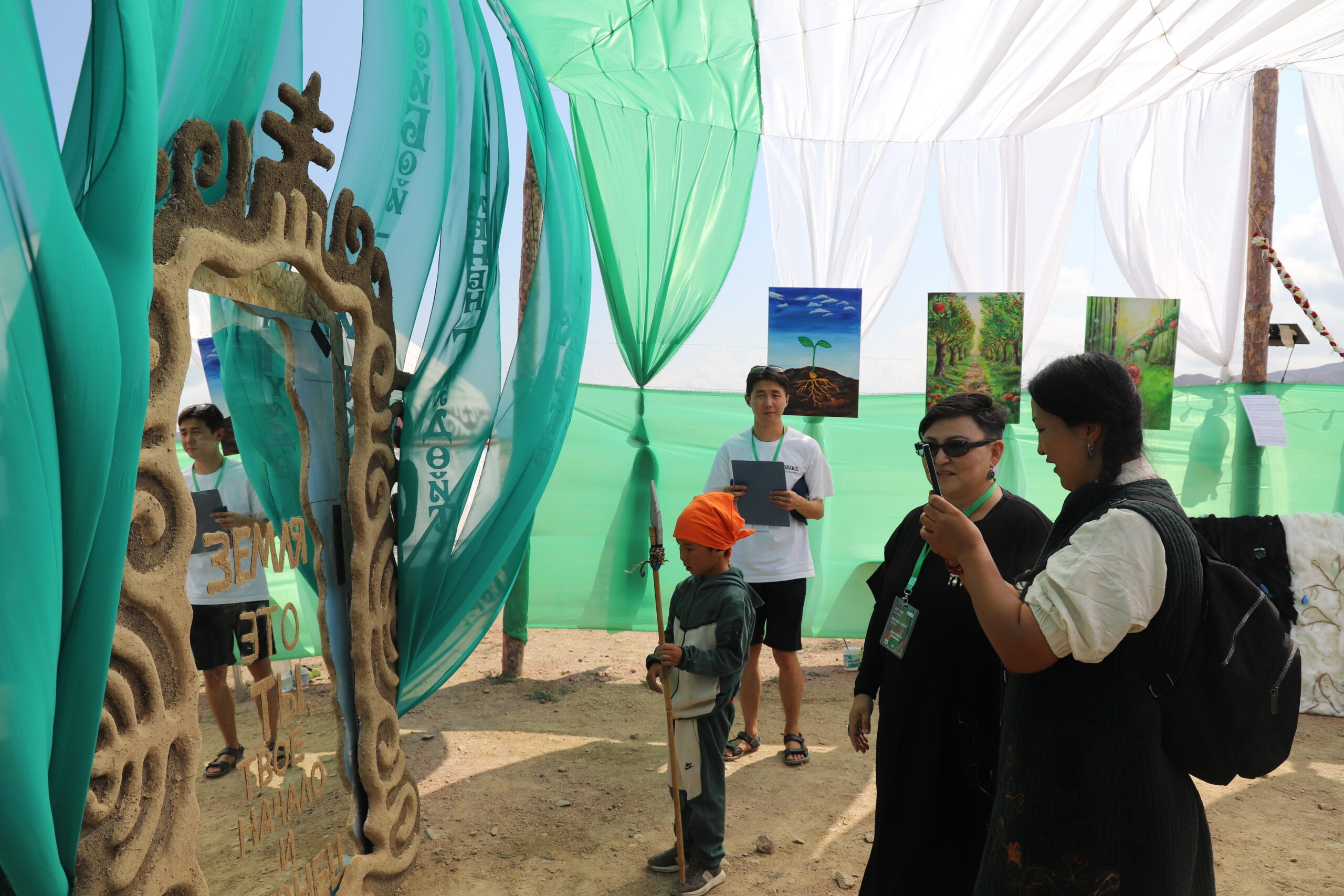
Visitors engaging with the exhibition
Folk Art (aytish) performances grounded in research
Another way we integrated art as a tool to communicate research results and raise awareness about soil health was through traditional oral poetry. For the project, we invited six akyns (singing poets) to create aytish performances about the connection between people and soil on the basis of the study’s findings. Aytish is a traditional popular form of improvisational, musical oral poetry with a long history in Kyrgyzstan. This form transformed complex concepts such as soil degradation, loss of organic matter, and principles of sustainable agriculture into powerful stories that resonated with their audiences.
The akyns made a live performance at the Kyrgyz National Philharmonic. In addition to that, El-Too filmed the performances and published them on their YouTube channel and social media.
Watch a performance by Temirbek Matybaev. One of his verses says:
“If I pause, the essence of the words is this:
The soil is the skin of the earth.”
Policy Dialogue
To advocate for the adoption of sustainable policy decisions and resource allocation and to challenge state policies that contribute to soil degradation, we have developed policy recommendations for diverse stakeholders. Two consultative seminars were conducted with 30–40 national and local duty bearers, soil experts, researchers, and civil society representatives. These meetings contributed to the formation of policy guidelines and practical recommendations to strengthen soil protection and sustainable land management.
The core of the ‘Reviving the Roots’ expert group consists of Nuraiym Syrgak (El Too), Altynai Zamirova (El Too), Simone de Boer (University of Gothenburg), Gustaf Sörnmo (Centralasiengrupperna), and Tatiana Stebneva (Centralasiengrupperna, University of Glasgow). The project received support from the Swedish International Agricultural Network Initiative (SIANI).